If you're nearby
Scored from our data, not ads.
Weekdays · quietest around 6p
Weekends · quietest around 9a
Estimate from the type of place and how famous it is. Holidays run busier.
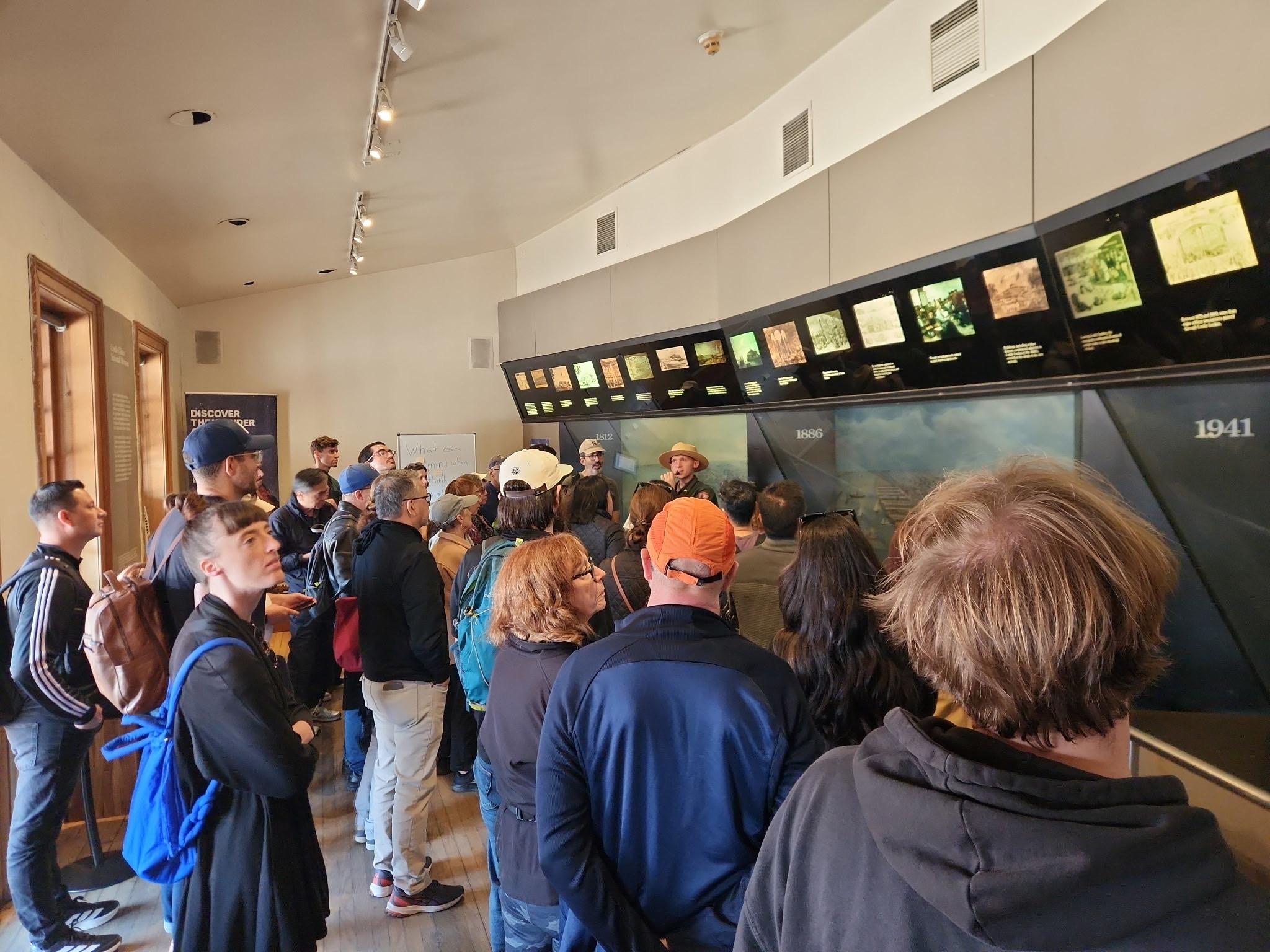
Kingsland Homestead is an 18th-century house located in Flushing, Queens, New York City. It is the home of the remains of The Weeping Beech, a landmark weeping beech tree, believed to have been planted in 1847. The homestead is also close to the 17th-century Bowne House, the location of the first Quaker meeting place in New Amsterdam. The homestead is operated by the Queens Historical Society, whose quarters are inside; the homestead is open to the public as a museum. The Kingsland Homestead is a member of the Historic House Trust, and is both a New York City designated landmark and a National Register of Historic Places listing.
History
Kingsland was built by Charles Doughty in approximately 1785 and the name "Kingsland" is believed to derive from Doughty's son-in-law, British sea captain Joseph King, who bought the home in 1801. Due to encroaching development from the proposed extension of the New York City Subway's Flushing Line in 1923, it was moved to the site of a stable, also built by King. The house was threatened again in 1965, by the construction of the Murray Hill Shopping Center, but the community was able to save the house and in that same year it was one of the...
Text from Wikipedia: Kingsland Homestead, CC BY-SA 4.0.
Official programs from the National Park Service. Details and sign-up on nps.gov.
 Free
 Free
 Free
 Free
 Free
 Free
Been to Kingsland Homestead? Rate it and share the best time, where to park, what to skip.